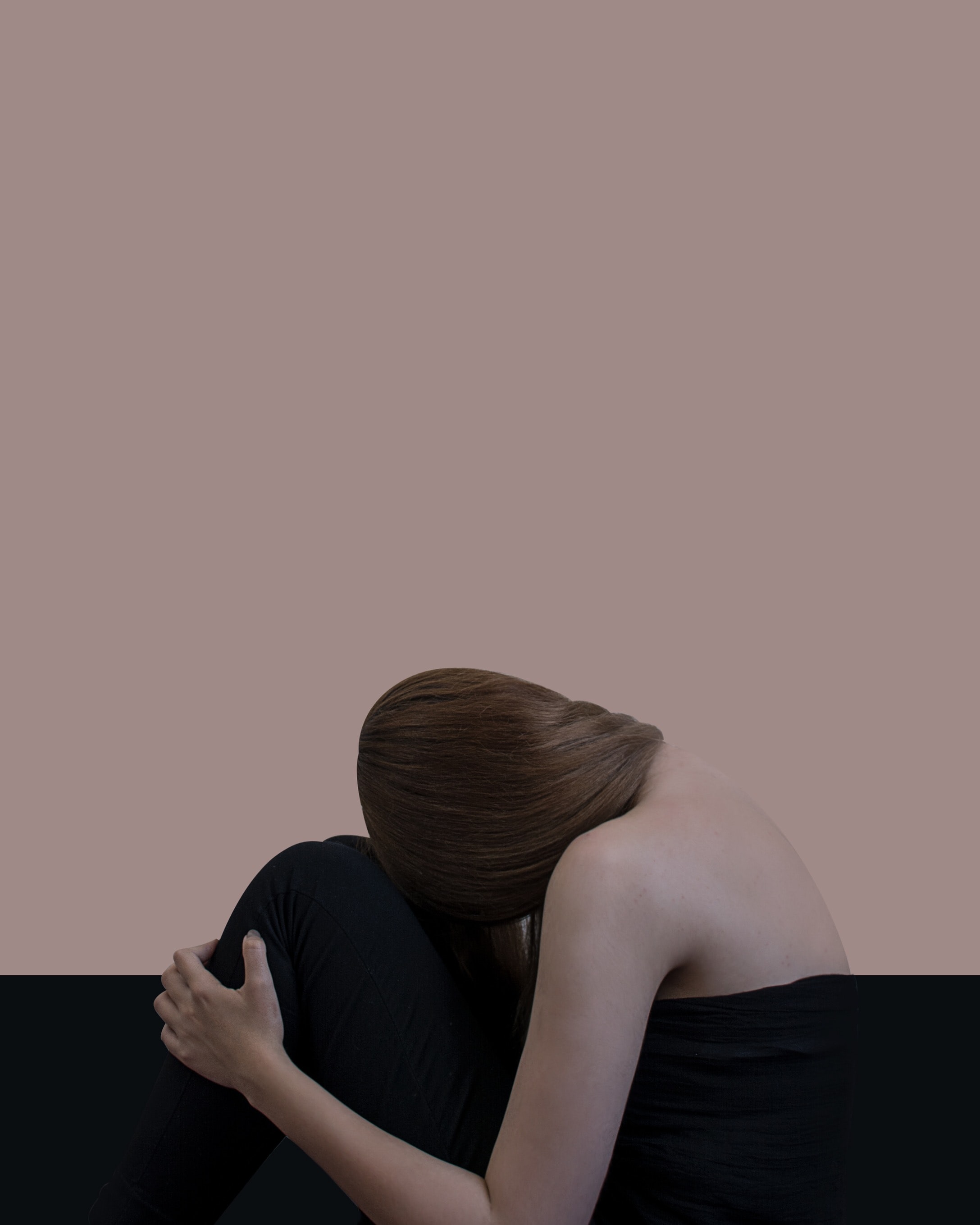
How do I cope with 2026?
It's day 11 in the big brother house of life - and we're all asking this question.

'are you seeing what I'm seeing? Are we together in this?'
As a counsellor, I often hear the question: “How do I cope with all of this (XYZ)?” and within that question, I usually hear two other elements. Firstly, I'm overwhelmed and I need stats on this because I feel I'm in over my head, but also secondly, I want to keep going, I want to find a way.
When people ask how to cope, they aren't only asking for techniques or my opinions, they are asking for solidarity - a sort of "are you seeing what I'm seeing? Are we together in this?". Despite myself, though I may appear to be waxing poetic, I feel like our role as counsellors is not just to hear the words of a question, but to understand where they come from and why the question is delivered to us. We are not politicians or financiers. What we hope to create is a safe space, perhaps you could even call it a place where we can make The Office-esque asides to the imaginary audience that is witnessing our lives and our trials. Essentially we offer a decompression chamber, a confessional: the place where we can say "I really don't think I've got this actually!!" and a place to sit in our fear without judgement. We provide that sort of 'human mirror'; something that one always reaches for in moments of obscurity or challenging experiences.
The world is on fire (metaphorically, and environmentally..)
Carl Rogers, pioneer of person-centred therapy stated: "when I look at the world I'm pessimistic, but when I look at people I am optimistic". Being perpetually online, constant connectivity, and relentless exposure to global crises can damage that optimism or at least alienate one away from the idea of people as community, as safety, and as 'experience-mirrors' and instead see people, and the world at large, as a threat. Doomscrolling and dislocated digital interaction leave many people feeling alienated: from themselves, from others, and from their own bodies. It isn’t human to exist in isolation, even when that isolation is overloaded with content. And we are increasingly seeing the consequences: heightened anxiety, emotional dysregulation, and a sense of powerlessness in the face of ongoing uncertainty. In fact, as obtuse as it may sound, sometimes when I reflect on the way we consume media, particularly highly emotive material or divisive material (think red-pill manosphere-esque content) I think of the scene in Stanley Kubrik's A Clockwork Orange where Alex (the protagonist) is strapped to a chair and forced to consume 'ultraviolence' - yet that was considered torture, not 'doomscrolling'...

In a paper by Tuğba Türk-Kurtça and Metin Kocatürk published in February 2025 (full article here), Türk-Kurtça and Kocatürk considered that "a growing phenomenon related to the constant exposure to news is doomscrolling - the compulsive consumption of negative news for extended periods. This behaviour is particularly prevalent during crises such as pandemics, political unrest, or natural disasters, when individuals seek information to manage uncertainty". Here I don't intend to pathologise a natural and justified fear of tyrannical leaders threatening war and perpetuating violence and violent rhetoric. Nor am I attempting to lighten-up the contexts here. However, I want to pull another element of the question on coping to the fore: a need to encourage emotional resilience, to consume content safely and constructively. Additionally, to be able to sit with challenging feelings such as helplessness and fear and instead of being pulled into the vacuous void or spirals of these intense experiences, to be able to grow through them, to find tools from within and to be able to regulate ourselves to be able to engage in a grounded way.
Mary Shelley captures this poignantly in Frankenstein when she writes: “Nothing is so painful to the human mind as a great and sudden change.” The question “How do I cope?” often emerges at this particular point ... when the pain of unknowing is experienced as completely unbearable, and the nervous system is searching for certainty. Sometimes, as frustrating as it sounds, the question itself matters more than the answer as it tells us where the pain is and it tells us what needs tending to.
So here I gently pass the question back to you: How do you cope with 2026? And what happens if that question is reframed, not as a problem to be solved, but as existential exclamations:
I don’t understand what’s happening.
It doesn’t make sense.
I feel anxious.
I’m scared about what might come.
2025 was hard and I don't want to go through that again.
If we take a moment here, before we try to work out the answers, something important becomes noticeable, and these exclamation/statements become our 'signals' or our 'canaries in the mine': they tell us where the points of struggle and distress can be located. They show us where the nervous system is holding fear, grief, and frenetic energy all at once. In this sense, distress becomes insightful information rather than something to try to run away from. It marks the places where support, regulation, and care are needed - both from the collective, from community, and from ourselves. Perhaps coping is less about standing strong, and more about staying in contact: with ourselves, with one another, and with the parts of us that are still asking to be seen.
When I was writing this blog post, my partner mentioned a relevant quote from the book Monolith to Microservices: Evolutionary Patterns to Transform Your Monolith, which is a text written primarily for software developers about designing robust programming systems. The author distinguishes between robustness and resilience, noting that “robustness is the ability to have a system that can react to expected variations. Resilience is having an organisation capable of adapting to things that haven’t been thought of”. The difference isn’t about remaining unchanged in the face of difficulty, but about being able to respond to challenges - even when we don’t know what those challenges will be. Coping skills help us move through situations that may shake us. Skills provide tools that remind us we don’t have to spiral, that we have ways to keep moving forwards. In that sense, coping skills help us remain robust. Resilience, however, adds to this and it is found in the groups and communities that can catch us and uplift us, and in our ability to choose environments (not only physical ones) that help us feel supported and held through the ever-changing tides of our lived experiences.

cooking with gas: shifting from being about coping to noticing and understanding
Before we can think our way through uncertainty, we must allow our bodies to feel safe enough to be present. Chronic stress dissociates us from our bodies and into vigilance, rumination, and burnout. Biological interventions can be so helpful here. This can include using heat (hot water bottles, warm baths/showers etc) to soothe and soften a nervous system locked in threat-mode, and cold can interrupt overwhelm and bring us back into the present moment (e.g. using ice packs to cool oneself down in moments of intense anger). These are embodied ways of communicating safety to the body. This blog (with whom I am not affiliated) really reflects the use of heat/cold well and thoroughly. Likewise, movement becomes essential and not as simply about exercising, but as movement to discharge anxious energy. Our bodies were never designed to metabolise fear while sitting still. Walking, stretching, shaking-it-out, running and dancing can help complete stress cycles that would otherwise remain trapped within us.
Ultimately, 'how do I cope?' is an internal and external question for each of us: from an internal position this question is essentially asking: What is happening and how on earth can I survive this? What past experiences frighten me about this change, this life? and then externally, it is asking: Who and what do I need around me to stay with my humanness through this? We are beings in time - we are both shaped by, and the contortionists of time and our lived experience (within the confines of our lives).
.
When we ask “How do I cope?” what we might inadvertently be asking of ourselves and those we are vocalising with: How do I remain in a world that feels unstable and hostile? How do I move with autonomy whilst I experience fear? How do I remain myself through change?.
There is no single answer to that question ... but there is a way of being with it. What we can do is listen to the body, stay connected to others, move when we want to freeze, rest when we want to push, and remembering that resilience is not an individual and isolated event, but a relational experience.
I would like to finish with a quote by Donna Haraway:
“Staying with the trouble requires learning to be truly present, not as a vanishing pivot between awful or edenic pasts and apocalyptic or salvific futures, but as mortal critters entwined in myriad unfinished configurations of places, times, matters, meanings.”
I wonder whether coping is not about resolving the uncertainty of our time, but about learning how to remain present within it, together in therapy and with the people around you.
My blog post song for today: M83 My Tears Are Becoming a Sea.
If you would like to start your therapy journey, and this post resonates with you, please do have a read through the way I work and how I can support you here. You can also reach out to me via my contact form here, and we can have a chat about what you are looking for in our work together. I currently have limited availability in Holborn on Tuesday mornings (at 10am), in Shoreditch on Friday evenings and in Buckhurst Hill on Thursdays and Wednesdays. I look forward to hearing from you!
Other posts I have written that may be interesting additions to this read:
New Year, more fear? A therapist's perspective - here I explore the concept of the new year and how to prepare for challenge and not give in to the peer pressure of 'new year, new me'.
Smells like spring spirit - here I talk about processing the new year from a seasonal perspective.
Better off alone? - this is a reflective look at the importance of connectivitiy and surrounding oneself with people and nature.
Be still ... - this article looks at the challenges on a daily and worldly scale that we experience. I talk about encourging regulatory behaviours, rest, and also I offer a thought experiment/activity to help you to visualise your concerns in order to contend with them.
I hope you have a restful weekend and take good care,